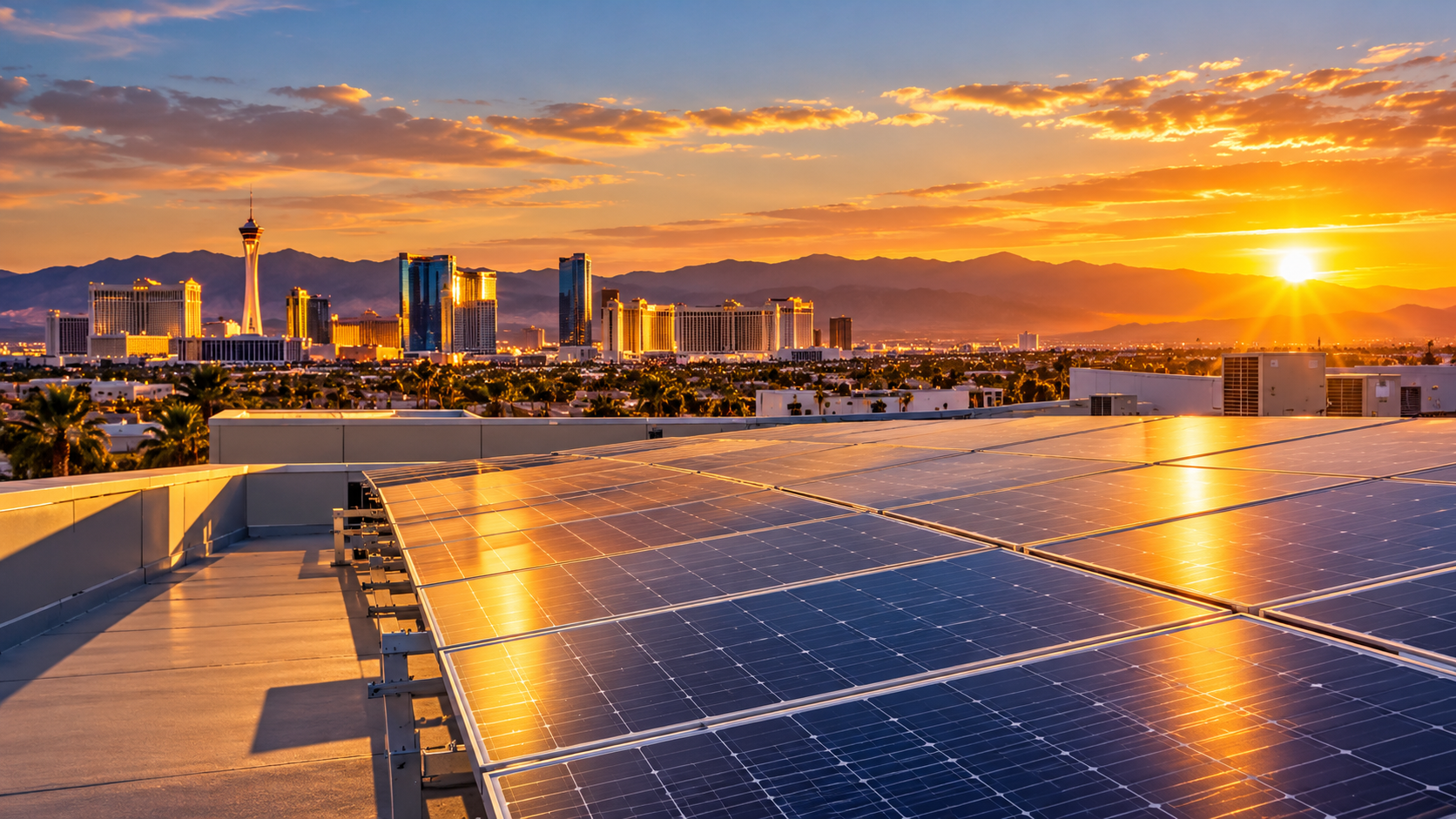
For Nevada businesses, electricity is an ongoing operating expense—and one that can have a meaningful impact on the bottom line. With abundant sunshine and businesses ranging from offices and retail locations to warehouses and larger commercial facilities, solar energy can provide an opportunity to produce more of the electricity a property needs on-site.
But Commercial Solar Panel Installation in Las Vegas NV is about more than simply adding solar panels to a building. A properly designed commercial solar system can help businesses manage energy costs, improve energy independence, and create a long-term strategy for managing electricity consumption.
Here are some of the key benefits Nevada businesses should consider.
1. Greater Control Over Energy Costs
Electricity is a recurring business expense. Unlike many operational costs, energy consumption is tied directly to the day-to-day operation of a facility.
Commercial solar can help businesses generate electricity on-site, potentially reducing the amount of electricity they need to purchase from the grid.
The actual savings will depend on factors such as system size, energy consumption, utility rates, building characteristics, and how much electricity the solar system produces. That makes accurate system design and realistic production estimates particularly important.
Rather than simply asking how many panels can fit on a roof, businesses should ask how a solar system can be designed around their actual energy profile.
2. Take Advantage of Nevada’s Solar Potential
Las Vegas and Southern Nevada receive substantial sunshine, making solar a natural consideration for many commercial properties.
A commercial solar system can use available roof or property space to generate electricity for the business. Depending on the facility, solar can be incorporated into an overall energy strategy designed around the property’s operating schedule and electrical requirements.
A professional site evaluation can help determine whether a property has appropriate space, electrical capacity, and conditions for a commercial solar installation.
3. Improve Long-Term Energy Planning
Businesses often make decisions based on long-term operating costs. Solar can become part of that planning by turning some of the property’s energy generation into an asset rather than relying entirely on purchased electricity.
Commercial solar projects should be evaluated over the expected life of the system rather than simply by looking at the initial installation cost.
The right approach is to consider projected energy production, utility costs, system performance, maintenance requirements, financing, and the business’s long-term plans for the property.
4. Battery Storage Can Add Flexibility
Solar panels generate electricity when the sun is available, but businesses may have significant energy needs outside those production hours.
Solar Battery Installation can provide another option for managing when stored solar energy is used.
Battery storage may help businesses use stored energy later, provide additional energy flexibility, and support certain backup-power strategies. The value of battery storage depends on the business’s energy usage, rate structure, system design, and operational goals.
For businesses considering solar, battery storage should be evaluated as part of the overall energy strategy rather than treated as an automatic requirement.
5. Support Energy Independence
Businesses depend on electricity to operate everything from lighting and HVAC systems to computers, refrigeration, manufacturing equipment, and other critical systems.
Generating some electricity on-site can reduce a business’s reliance on the utility grid for its energy needs.
For some businesses, combining solar with battery storage may provide an additional level of energy flexibility. However, solar and battery systems need to be properly designed around the facility’s electrical infrastructure and the equipment the business needs to support.
6. Make Better Use of Commercial Property
Commercial properties often have large, underutilized roof areas or other spaces that may be suitable for solar.
Instead of viewing available roof space solely as part of the building envelope, businesses can evaluate whether it can support an energy-producing asset.
The feasibility of a project depends on the property’s structure, roof condition, orientation, shading, electrical infrastructure, available space, and other site-specific considerations.
A professional assessment can determine whether the property is a good candidate for solar before a business commits to a project.
7. Work With an Electrical Contractor That Understands Commercial Systems
Commercial solar is also a significant electrical project. System design and installation need to account for the property’s existing electrical infrastructure and operational requirements.
Working with an experienced Solar Electrician in Las Vegas businesses can rely on helps ensure the solar project is considered as part of the facility’s larger electrical system.
Accel Electric is a licensed Nevada electrical contractor offering residential and commercial solar installation. Its solar services include custom system design and installation, battery storage and energy management, grid integration and permitting, and ongoing maintenance and monitoring.
8. Plan for Permitting, Interconnection and Compliance
Commercial solar projects require more planning than simply installing equipment on a roof. Permitting, electrical requirements, grid interconnection, site conditions, and the property’s existing infrastructure all need to be considered.
Nevada’s energy policies and utility requirements can also evolve, which makes current project planning important.
A local Nevada installer can help businesses understand the requirements that apply to their project and coordinate the installation process accordingly.
9. Consider Available Incentives Carefully
Tax incentives and other energy-related programs can influence the financial picture of a commercial solar project, but businesses should be careful about relying on outdated information.
Federal clean-energy incentives have undergone significant changes, and eligibility can depend on factors such as when a project begins construction, when it is placed in service, project characteristics, and the taxpayer’s circumstances. The IRS currently provides separate guidance for clean electricity investment and production incentives, including rules affecting solar and energy storage.
Businesses should work with their tax professional to determine which incentives, deductions, or other tax considerations may apply to a specific project.
Is Commercial Solar Worth It for a Nevada Business?
There isn’t one answer for every business. The potential value of commercial solar depends on the property’s electricity consumption, utility rates, available installation space, system size, financing structure, expected production, and long-term plans for the property.
The best way to evaluate a project is through a property-specific analysis rather than relying on generic savings estimates.
A reputable solar contractor should be able to explain the assumptions behind the system design and provide realistic expectations for energy production.
Choosing a Commercial Solar Installer
When evaluating Commercial Solar Panel Installation in Las Vegas NV, businesses should look for an installer that can provide:
- Customized commercial system design
- Professional electrical installation
- Evaluation of the property’s existing electrical infrastructure
- Solar and battery storage options
- Assistance with permitting and grid integration
- Realistic production estimates
- Ongoing monitoring and maintenance
- Local knowledge of Nevada requirements
Choosing a contractor capable of handling both the solar and electrical sides of the project can also simplify coordination.
Build a Smarter Energy Strategy With Commercial Solar
For Nevada businesses, commercial solar can be an opportunity to take greater control over energy use while making better use of available property space. When properly designed, solar can become part of a long-term energy strategy rather than simply another building improvement.
If you’re considering Solar Panel Installation in Las Vegas NV for a commercial property, Accel Electric, LLC can evaluate your facility’s energy needs and develop a customized solar solution. From system design and installation to battery storage, grid integration, permitting, and ongoing monitoring, Accel Electric provides end-to-end solar services for Nevada businesses.
Ready to explore commercial solar? Contact Accel Electric at 702-218-8749 to discuss your property’s solar installation options.